


How to book a session with a psychologist in London?

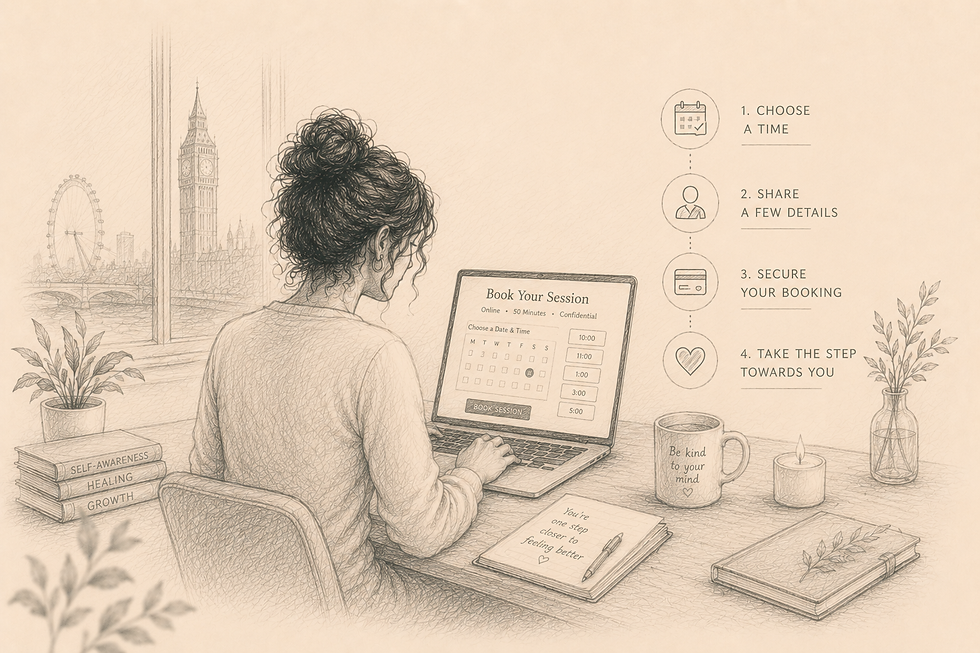
Searching for a psychologist in London can feel overwhelming: countless titles, different approaches, varying fees, and wait times that don’t always match the urgency of how you feel today. The good news is that booking a first session can be simple when you know what to look for and how to take the next step with confidence.
I’m Noush Navazani, a psychology-trained integrative therapist, author and doctoral researcher based in London. I work with individuals and couples using evidence-informed approaches including CBT (Cognitive Behavioural Therapy) and Schema Therapy. This guide walks you through practical steps to find the right professional for you—whether that’s a psychologist, psychotherapist or counsellor—and how to book your first appointment without second-guessing yourself.
Step 1: Clarify what you need
Before you search, spend five minutes noting the essentials. It makes your shortlist clearer and your first conversations easier.
Your goals: What would you like to be different three months from now? For example: fewer anxiety spikes, better sleep, feeling less stuck in relationship patterns, coping after a loss, or navigating conflict as a couple.
Format: In-person in London, online, or a hybrid? Solo (Individual Therapy) or Couples Therapy if the focus is relational.
Approach: Some people prefer structured methods like CBT for anxiety or habits; others benefit from deeper pattern work such as Schema Therapy.
Budget and timing: What’s your weekly/fortnightly budget and ideal time of day? Many London therapists offer daytime, evening, and sometimes weekend slots.
Urgency: Do you need to start within days, or can you wait for a specific therapist?
Step 2: NHS vs private routes in London
NHS Talking Therapies (self-referral): In England, you can self-refer to NHS Talking Therapies for common difficulties such as anxiety and depression. It’s free at the point of use. Wait times vary by borough; you’ll usually complete an assessment first, then be offered a programme such as guided self-help, CBT, or group work. If cost is a barrier and your needs match the service scope, this is a good starting point.
Private route: Private therapy offers more choice of clinician, approach and scheduling, often with shorter waits. You can book directly without a GP referral. Fees vary (more on this below). Private therapy can be particularly helpful if you’re seeking a specialised approach (e.g., Schema Therapy), prefer continuity with the same clinician, or need flexibility around work and travel.
Step 3: Know the titles and credentials
In the UK, several professionals provide therapy. Understanding titles helps you check the right registers and choose with confidence:
Clinical or Counselling Psychologist: Doctorate-trained, regulated by the HCPC as Practitioner Psychologists. Many deliver CBT and integrative therapies.
Psychotherapist or Counsellor: Usually accredited with BACP or UKCP. Training routes vary; many are highly experienced in particular models (e.g., psychodynamic, integrative, CBT, Schema Therapy).
CBT Therapist: Often accredited by BABCP (gold standard for CBT delivery in the UK).
Psychiatrist: A medical doctor who can prescribe medication. Therapy may be offered but is not the core role.
Tip: Whatever the title, check professional registration (HCPC, BACP, UKCP, BABCP) and read how they describe their approach. Look for experience with your concern (e.g., Anxiety Therapy, trauma, couples work).
Step 4: Shortlist professionals
Good places to search include:
Professional directories: HCPC (for Practitioner Psychologists), BACP, UKCP, BABCP, and the British Psychological Society (BPS) for Chartered Psychologists.
Therapy directories with filters for approach, fees, and location (London boroughs, online, evening availability).
Personal recommendations from trusted friends, your GP, or workplace wellbeing services.
As you browse, prioritise:
Fit with your goals: Do they mention anxiety, relationships, self-esteem, burnout, or the patterns you recognise?
Approach and tone: Does their style feel clear, warm and grounded? Do they offer CBT or Schema Therapy if that appeals to you?
Practicalities: Fees within budget, session length, cancellation policy, and London location or online option.
Step 5: Arrange an introductory call—what to ask
Most professionals offer a brief phone or video call to see if you’re a good fit. A free 15–30 minute consultation is common in private practice. Useful questions include:
Have you worked with people experiencing [your concern] before? What approaches do you draw on?
How do we set goals and review progress? How structured are sessions?
What’s the fee, session length, and cancellation policy?
Do you offer online, in-person, or hybrid sessions? Where in London are you based?
How do you ensure confidentiality and data protection (GDPR)?
What might the first 4–6 sessions look like?
Whilst you listen to their answers, also notice how you feel: Do you sense warmth, clarity and safety? That gut feeling matters.
Step 6: Fees, logistics and practicalities in London
Typical fees (guidance only, varies by clinician and borough):
Individual therapy: approximately £80–£150 per session
HCPC-registered psychologists: often £120–£180+ per session
Couples therapy: typically £120–£200 per session
Ask about concessions for students, key workers, or daytime slots. Clarify:
Session length (commonly 50 minutes) and frequency (weekly or fortnightly)
In-person location (transport links, accessibility) or online platform used
Invoices, insurance receipts, and payment methods
Holidays, rescheduling and cancellation policies
Step 7: Preparing for your first session
Your first session is about understanding your story and what you want from therapy. To make the most of it:
Jot down your main concerns, any triggers, and what a “good outcome” might look like.
List past supports or therapies that helped (or didn’t) and why.
Bring practical questions you didn’t cover in your consultation.
Decide whether you prefer a structured start (e.g., CBT tools) or an exploratory conversation—share that preference.
It’s normal to feel a little nervous. A good therapist will pace the conversation and collaborate with you.
Step 8: Signs of a good therapeutic fit—and when to change
Therapy is most effective when you feel safe, understood, and gently challenged. Positive signs include:
Clear, agreed goals and a sense of direction
Feeling heard without judgement
Practical tools that match your needs (e.g., CBT for anxiety spikes) and space for deeper pattern work if needed (e.g., Schema Therapy)
Regular check-ins on progress
If after 2–3 sessions it doesn’t feel right, it’s okay to raise this. A thoughtful clinician will discuss adjustments or help you find a better fit. There’s no obligation to continue if it isn’t working for you.
Online or in-person in London? Making the choice
Online therapy suits busy schedules and reduces travel across London. It can be as effective as in-person for many concerns, including Anxiety Therapy and relationship skills between sessions for couples. In-person may feel better if you value a consistent, private space or are working through trauma with grounding techniques.
Many clients choose a hybrid approach—online during hectic weeks and in-person when feasible.
How I work—and easy ways to begin
I offer Individual Therapy and Couples Therapy in London and online. My integrative style brings together practical tools from CBT (to reduce immediate symptoms and build coping strategies) and deeper work from Schema Therapy (to understand long-standing patterns shaped by earlier experiences). We go at your pace—structured where helpful, reflective where needed—so the work is both grounded and personal.
Alongside therapy, some clients find my book, The Child Behind Your Patterns, a supportive companion between sessions. It explores how early experiences can shape current behaviours and relationships, and offers gentle, evidence-informed exercises. It’s not a substitute for therapy, but it can help you make sense of what shows up in the room.
If you’re considering starting soon, we can begin with a free 30-minute consultation to talk through your goals, practicalities, and whether we’re a good fit. There’s no pressure to commit—just a conversation to help you decide your next step.
If you’re in immediate crisis
If you feel at risk of harming yourself or someone else, or you don’t feel safe, please seek urgent help now. In the UK, call 999, go to your nearest A&E, contact NHS 111, or call Samaritans on 116 123. You can return to this guide when you’re safe.
Conclusion: Your next step
Booking a session with a psychologist or therapist in London doesn’t have to be complicated. Clarify what you need, decide whether NHS or private suits you best, check credentials, and use a short consultation to gauge fit. From there, the first session becomes a natural next step rather than a leap.
If you’d like a calm, structured way to start, I’d be glad to help.
10. FAQ Section
Do I need a GP referral to see a psychologist or therapist privately in London?
No. You can contact a private psychologist or therapist directly and book an initial consultation without a GP referral. Some insurance policies may require a GP letter—check your cover.
How much does a private psychologist or therapist cost in London?
Fees vary. As a guide: £80–£150 for individual sessions; £120–£180+ for HCPC-registered psychologists; £120–£200 for couples therapy. Ask about concessions and cancellation policies.
What’s the difference between a psychologist, psychotherapist, counsellor and psychiatrist?
Clinical/counselling psychologists are doctorate-trained and regulated by HCPC; psychotherapists and counsellors are typically accredited by BACP or UKCP; psychiatrists are medical doctors who can prescribe medication. All (except psychiatrists if not offering therapy) may provide talking therapy—check credentials and approach.
Can I do therapy online if I live in London?
Yes. Online therapy is widely available and effective for many concerns, including anxiety, stress and relationship challenges. Many clinicians offer hybrid options.
How quickly can I start?
Private availability can be within days to a couple of weeks. NHS Talking Therapies wait times vary by borough—check your local service for current estimates.
What if therapy doesn’t feel right after a few sessions?
It’s okay to say so. Discuss what’s not working—approach, pace, goals—and agree adjustments or ask for a referral. The right fit matters more than continuing out of obligation.
11. Call to Action
Ready to take the next step? Book a free 30-minute consultation with me, Noush Navazani, to explore what you need, ask questions, and see if we’re a good fit—for Individual Therapy, CBT, Schema Therapy or Couples Therapy in London or online. There’s no pressure to commit; just a supportive space to decide your way forward.


Comments